If you’re on tirzepatide, or thinking about it, you may wonder whether you’ll lose muscle along with the fat. A new trial found that lifting weights on the drug slowed that loss a little and made people stronger.
Research news, not medical advice: one study, explained. Ask your doctor what it means for you.
- Published: Nature Medicine, November 9, 2026, peer-reviewed
- Who was studied: 120 adults aged 50 to 70, half postmenopausal women, with overweight or obesity, no diabetes, and no regular exercise habit.
- What kind of study: a randomized trial. Everyone took tirzepatide, and chance decided who also lifted weights.
- How long: 40 weeks
- Who paid: Western Australian government and Australian postgraduate research awards. Eli Lilly supplied the drug free and reviewed the protocol and a draft but, per the paper, made no edits and didn’t run the trial.
What they asked people to do
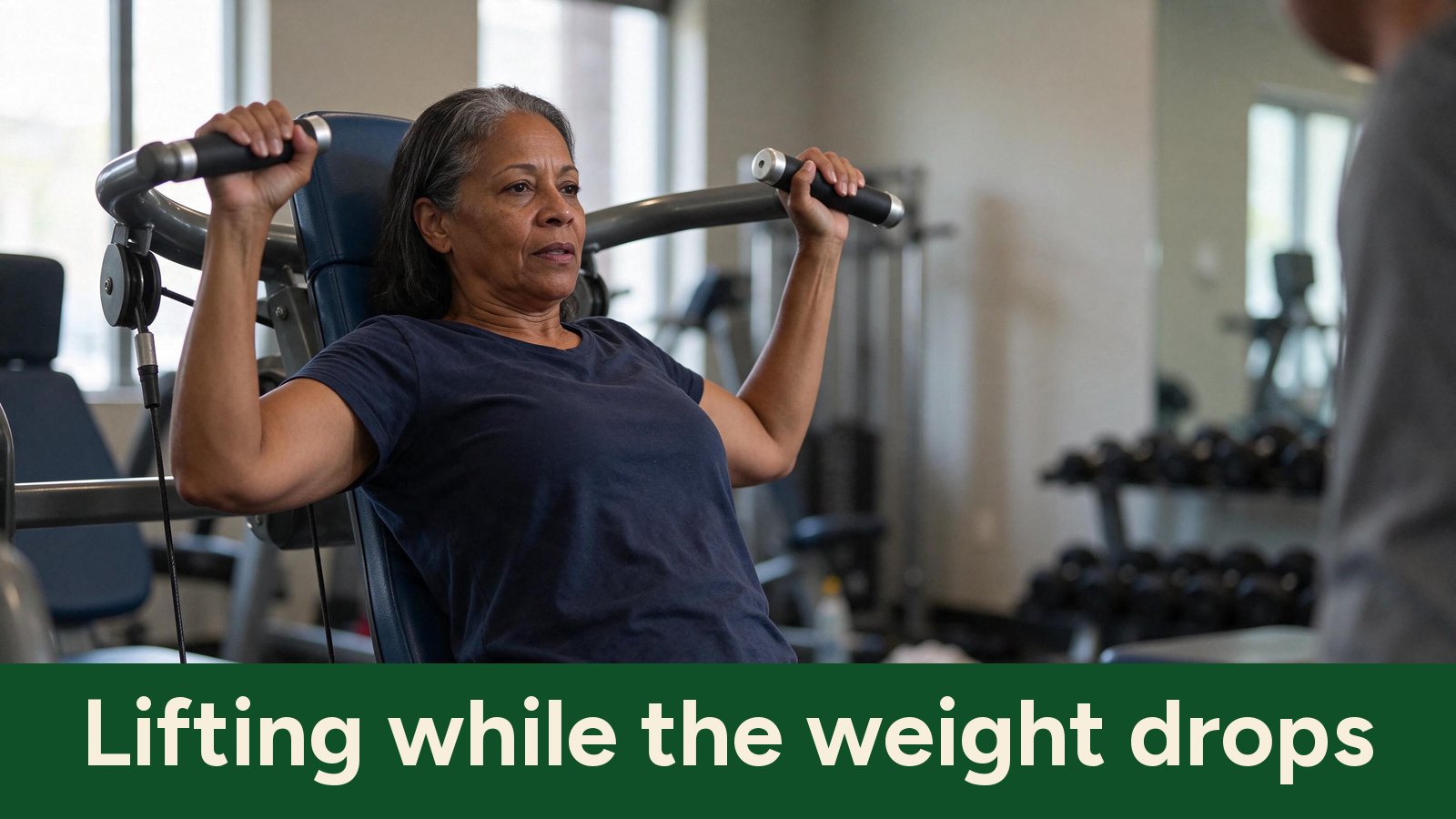
The trial, called T-REx, is the first randomized test of resistance training with tirzepatide, its authors say. Volunteers had obesity, or overweight plus a weight-related condition.
About half kept their usual activity. The rest did three sessions a week, coached by exercise physiologists, and made about 9 in 10 of them. Everyone was asked to maintain protein, with no set meal plan. Among people who kept food diaries, calories and protein were similar. Nearly everyone finished.
Same loss on the scale, a split in strength
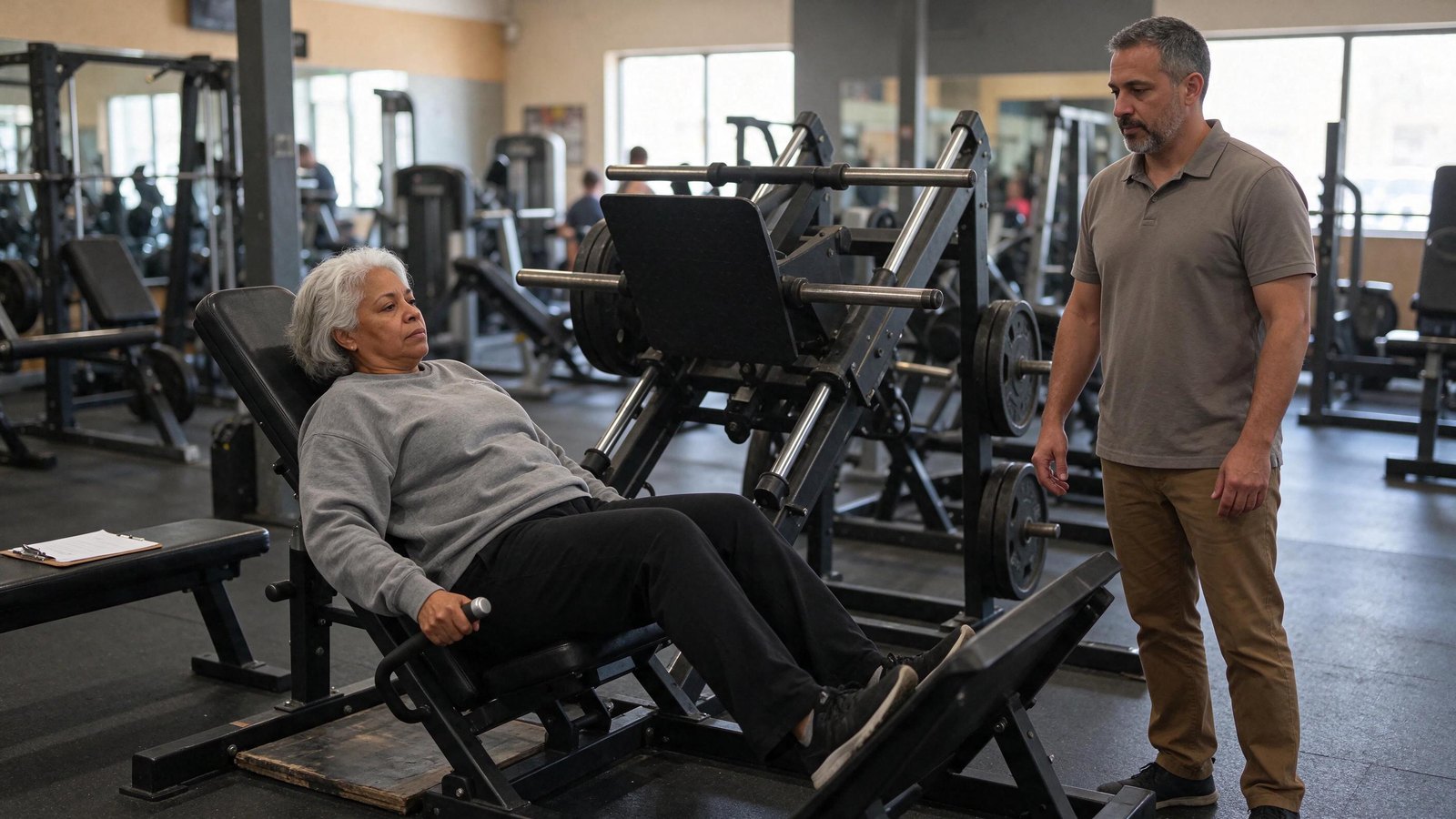
Each group lost about 49 to 50 pounds, most of it fat. Blood pressure, blood sugar, and total cholesterol improved about equally either way. Strength is where the groups split.
Lean soft tissue, a DXA scan’s term for everything that isn’t fat or bone mineral, fell by about 10 pounds without lifting and about 8 pounds with it, a gap of just over 2 pounds. On their heaviest single lift:
- Bench press: down about 9 pounds without lifting, up about 10 with it.
- Lat pulldown: down about 10 pounds, up about 19.
- Knee extension: down about 10 pounds, up about 13.
That’s roughly a 6 to 9 percent drop without lifting and a 10 to 18 percent gain with it. Stomach side effects were similar either way: about half had nausea, and about a third each had vomiting, constipation, or diarrhea. Some people reported low mood, and a few fainted, though dizziness and fainting usually eased within 8 to 10 weeks. Six serious events were judged unrelated to tirzepatide.
How much to trust it

Both groups still lost lean tissue. The 2-pound gap is real but modest next to the 8 to 10 pounds each group lost. And a DXA “lean” number isn’t pure muscle; fat tissue is partly water and protein, so losing fat takes some lean with it. Both groups lost similar fat, though, so that doesn’t explain the gap. The authors estimate limb muscle loss at about 5½ pounds without lifting and 4½ with it, a pace they compare with a decade or more of aging.
The volunteers were a narrow group. Every woman was postmenopausal, which leaves out perimenopause and anyone under 50. No one had diabetes or known heart disease, took blood pressure pills or statins, or exercised regularly. Training was supervised at one Australian center, with high attendance. The authors say the program still needs testing in routine clinical practice, and more studies are needed to know how the lean-tissue difference affects long-term health. People knew they were lifting, and a strength test rewards effort in a way a scan doesn’t. With no group off the drug, the trial can’t separate tirzepatide from weight loss itself.
Danny Green, who led the trial, called loss of lean mass, including muscle, “an inevitable part of weight loss by any method.” 2 Katie Lyndon of Exercise and Sports Science Australia, who wasn’t involved, told ABC News that losing strength could turn “a simple stumble” into “fractures, a hospital bed or lost independence.” 3 This trial didn’t count falls or fractures.
What clinicians were already saying
In 2025, four obesity and nutrition groups advised clinicians to protect muscle and bone during GLP-1 treatment with resistance training and a suitable diet. T-REx directly tests the training half. 4
In an earlier trial, adults who’d lost weight on a low-calorie diet were assigned a year of exercise, the older drug liraglutide, both, or neither. The combination was tied to keeping weight off and holding lean mass. 5 That exercise was aerobic, the T-REx authors note, and knee strength didn’t clearly change. Weights, started with the drug, are what moved strength here.
U.S. guidelines ask adults for muscle-strengthening work on at least two days a week. 6 This trial used three supervised sessions. Tirzepatide is the ingredient in Zepbound, for weight, and in Mounjaro, for type 2 diabetes. 7
- If you’re on tirzepatide or considering it, ask your prescriber about lifting. This study isn’t a reason to start, stop, or change a dose on your own.
- If the gym is new, a trainer helps, especially if your joints hurt or you’ve felt dizzy.
- Nausea was common, and blood pressure fell. Skip a heavy session if you feel faint, and call your prescriber about fainting, severe vomiting, or low mood that worries you.
- Keep a protein food in the meals you can eat. The trial didn’t test a high-protein plan, and a shake doesn’t replace lifting.
- Track a strength you can feel, like carrying groceries. The scale moved about the same in both groups; strength set them apart.
Sources
- Green DJ, Haynes A, Underwood DR, et al. Resistance exercise to attenuate lean mass loss during tirzepatide therapy for obesity: a randomized controlled trial. Nature Medicine. 2026. Online ahead of print. https://doi.org/10.1038/s41591-026-04752-5
- University of Western Australia. Resistance training key to maintaining muscle function during GLP-1 weight loss. News article. 10 November 2026. https://www.uwa.edu.au/news/article/2026/november/resistance-training-key-to-maintaining-muscle-function-during-glp1-weight-loss
- Dalzell S, Gribbin C. Weight-loss drug boom could leave Australians facing bone fractures and muscle loss. ABC News. 25 November 2026. https://www.abc.net.au/news/2026-11-25/glp1-weight-loss-muscle-loss-bone-fractures/107419818
- Mozaffarian D, Agarwal M, Aggarwal M, et al. Nutritional priorities to support GLP-1 therapy for obesity: a joint advisory from the American College of Lifestyle Medicine, the American Society for Nutrition, the Obesity Medicine Association, and The Obesity Society. Obesity. 2025;33(8):1475-1503. https://doi.org/10.1002/oby.24336
- Lundgren JR, Janus C, Jensen SBK, et al. Healthy weight loss maintenance with exercise, liraglutide, or both combined. New England Journal of Medicine. 2021;384(18):1719-1730. https://doi.org/10.1056/NEJMoa2028198
- U.S. Department of Health and Human Services, Office of Disease Prevention and Health Promotion. Top 10 things to know about the second edition of the Physical Activity Guidelines for Americans. Web page. Updated 19 November 2025. https://odphp.health.gov/our-work/nutrition-physical-activity/physical-activity-guidelines/current-guidelines/top-10-things-know
- U.S. Food and Drug Administration. FDA approves new medication for chronic weight management. Press release. 8 November 2023. https://www.fda.gov/news-events/press-announcements/fda-approves-new-medication-chronic-weight-management



Leave a Reply