Search “belly fat after 50” and you will get a pile of lists promising one food that melts it. If that food existed, the lists would not need a new headline every week.
This is general information, not a meal plan for your labs, your joints, or a prescription you already take.
The fat these foods are actually about
The pinchable layer under the skin is not the one researchers worry about most. Visceral fat sits deeper, packed around the organs. Higher amounts of it travel with high blood pressure, diabetes, and fatty liver. 1
After menopause, more of the fat women carry tends to sit at the middle, and lean mass often slips at the same time. A follow-up of 234 Finnish women, ages 47 to 55, found lean mass and thigh muscle declining as they moved from perimenopause into early postmenopause. Menopausal status predicted those changes. So did physical activity. 3
That is why a food list with no protein and no walking is a thin plan. The waist and the muscle are moving together.
The pattern dietitians keep repeating:
- Soluble fiber from beans, oats, and fruit.
- Protein at meals, so weight loss does not take muscle with it.
- Fewer sugary drinks and snack foods that crowd those out.
- Walking on the same days you change the food.
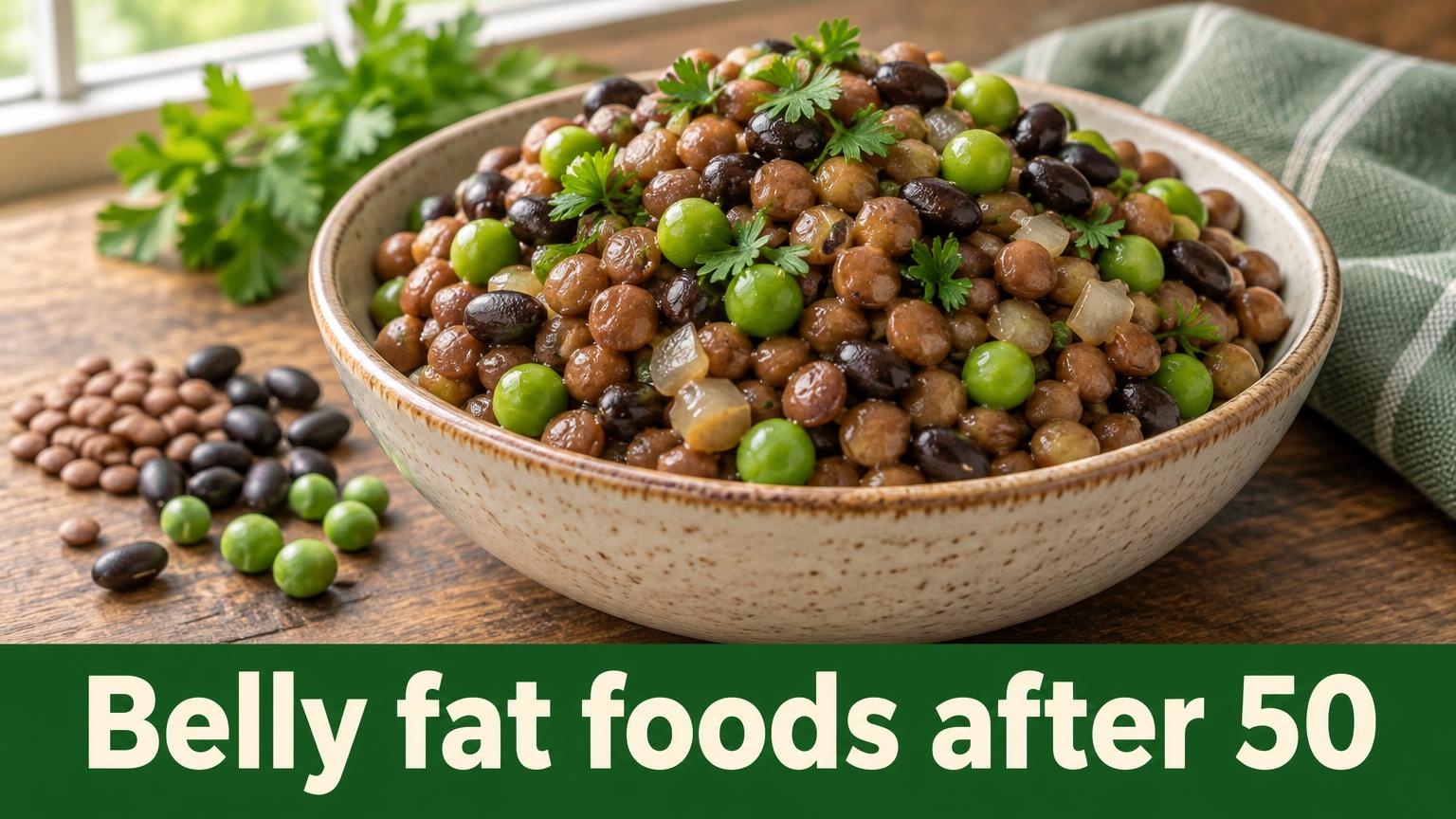
1. Beans, lentils, and peas
These are the clearest food on the list, and the reason is fiber, not a fat-burning compound.
In a five-year study of 1,114 African American and Hispanic American adults, researchers measured belly fat with CT scans twice. For every 10 grams more soluble fiber people ate per day, visceral fat accumulated about 3.7% more slowly. The same fiber bump was not tied to the fat just under the skin. People who were moderately active accumulated visceral fat about 7.4% more slowly than less active people. 1
This was not an experiment that handed people a bowl of lentils. It was a pattern in how people already ate and moved. Still, it is the most specific food finding in this whole topic.
A practical 10 grams, from the researchers’ own example: two small apples, a cup of green peas, and half a cup of pinto beans. 1
Half a cup of lentils or black beans at lunch covers a real share of that, and it adds protein so the meal holds you.
2. Oats and barley
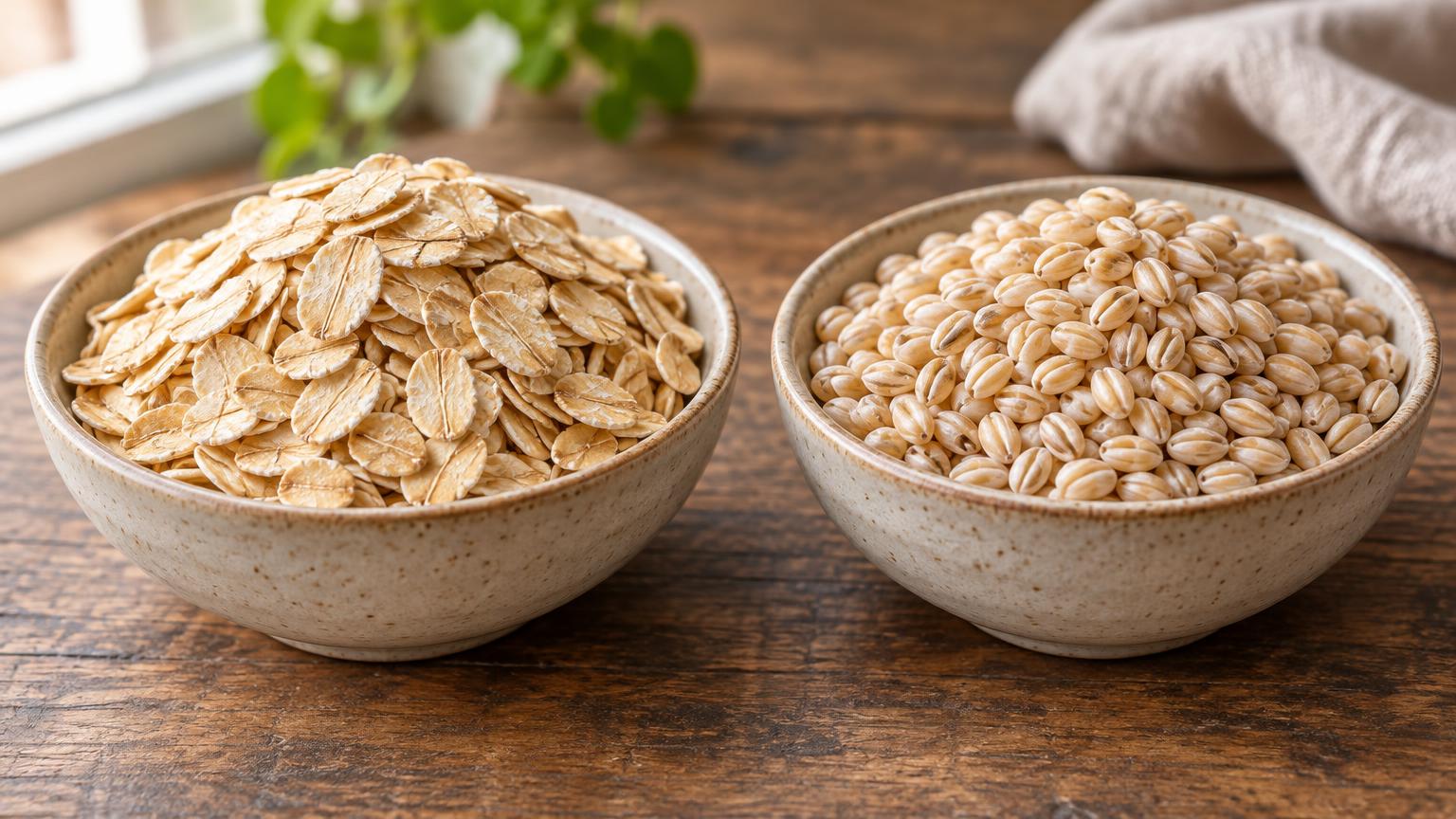
Oats and barley carry beta-glucan, a soluble fiber in the same family as the fiber in that CT study. They are not a separate miracle. They are an easy breakfast version of the same idea. 1
Use rolled or steel-cut oats, not a packet with brown sugar already in it. A bowl with fruit and some yogurt or an egg on the side is a different meal from a sweetened oatmeal cup.
3. Apples, berries, and citrus
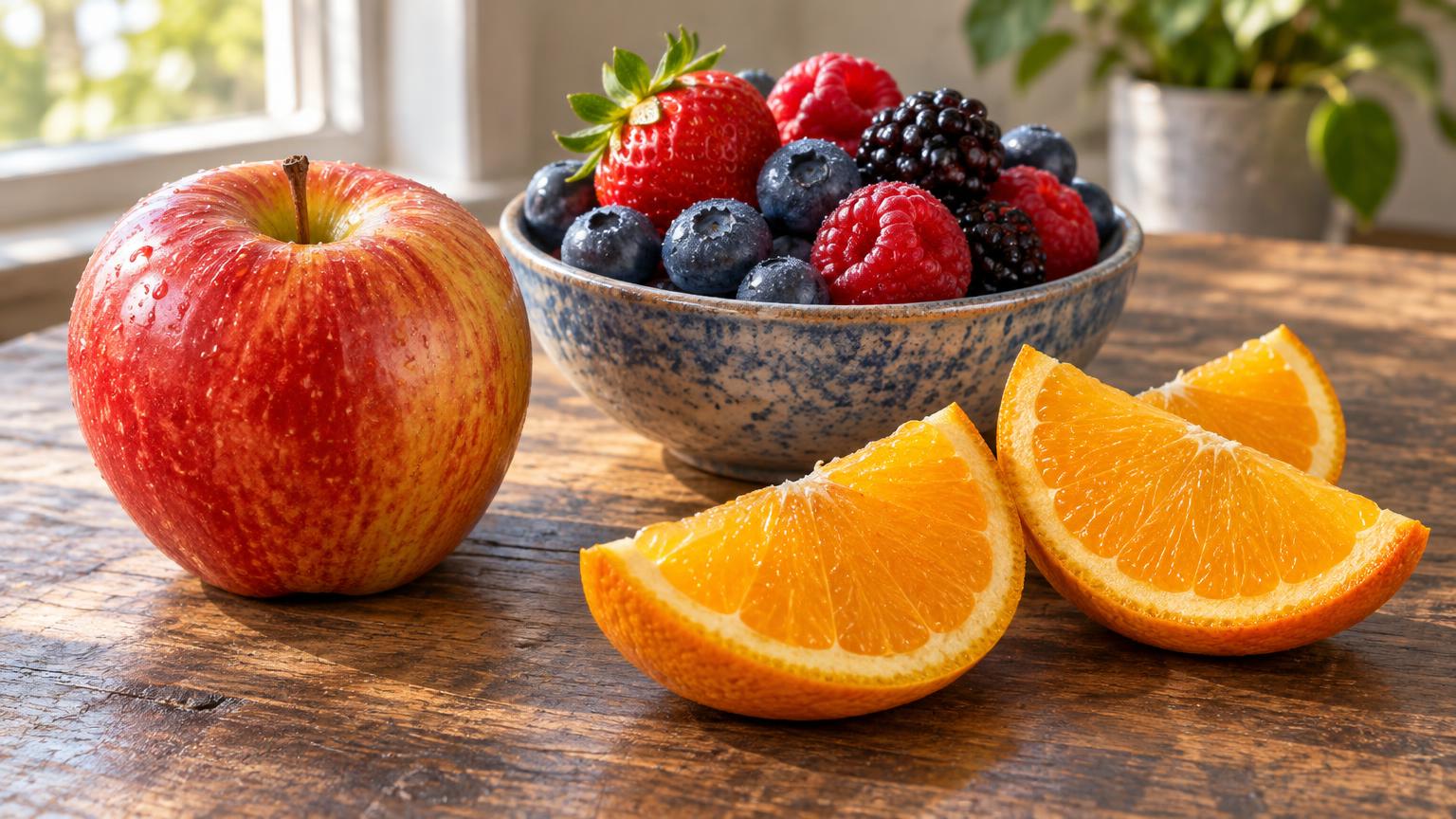
Fruit earns a spot because it is how a lot of people actually get soluble fiber, and because it takes the place of a dessert that is mostly sugar. The apple in the 10-gram example above is doing fiber work, not magic. 1
Whole fruit beats juice here. Juice drops the fiber and keeps the sugar. A piece of fruit with a protein food, yogurt or cheese or an egg, keeps the snack from being a blood-sugar spike and a crash.
4. Yogurt, eggs, fish, and chicken
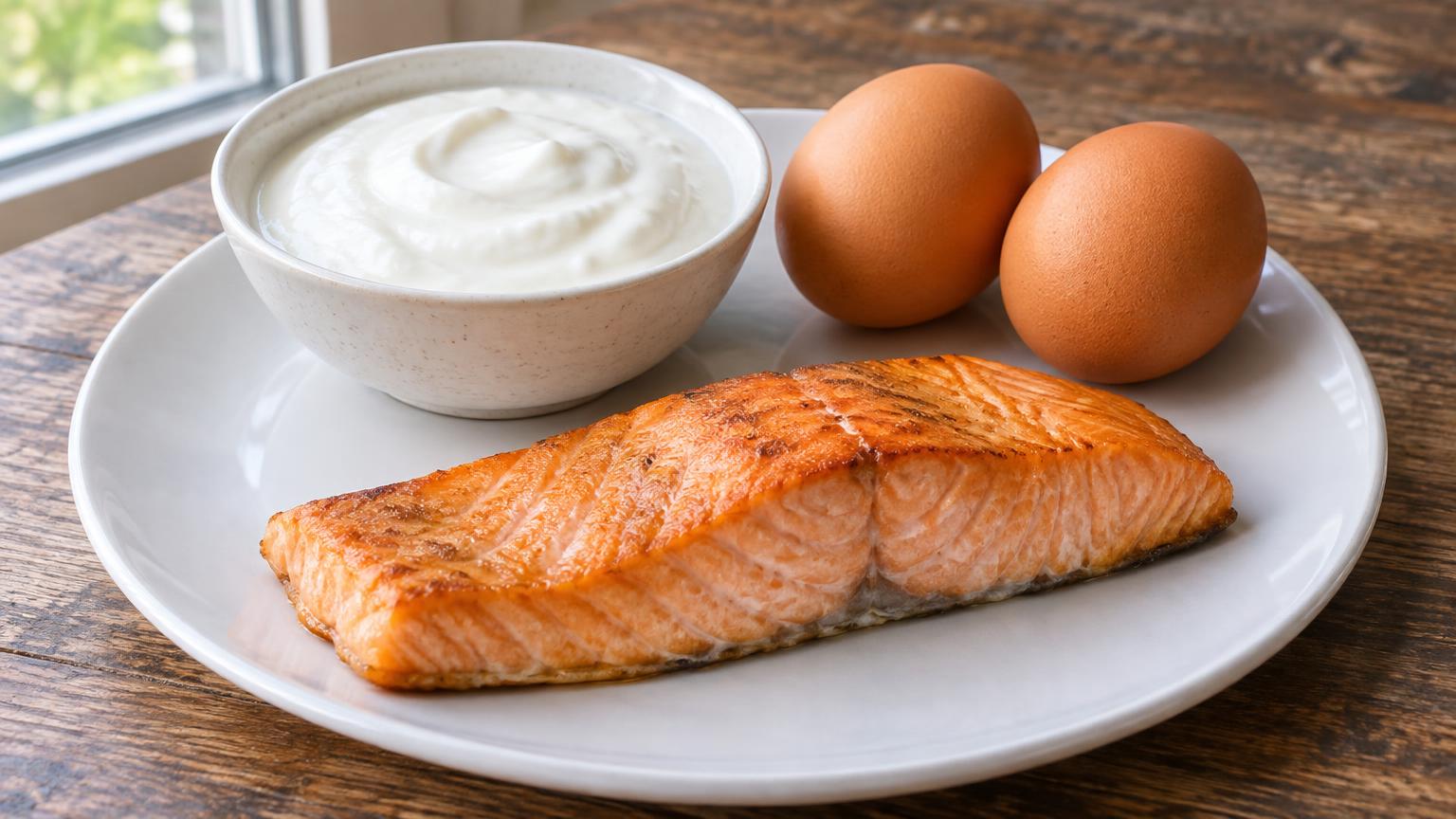
These are not belly-fat foods in the headline sense. They are how you lose fat without handing over muscle.
The long-standing minimum for adults, the RDA, is 0.8 grams of protein per kilogram of body weight a day. That number was built to prevent deficiency. For healthy people over 65, the PROT-AGE group recommends at least 1.0 to 1.2 grams per kilogram, more if you are active, and says a useful per-meal amount is often 25 to 30 grams. People with severe kidney disease, an eGFR under 30 and not on dialysis, are the exception and may need to limit protein. 4
A woman at 150 pounds is about 68 kilograms. The RDA is about 54 grams. The older-adult range is about 68 to 82 grams. Plain Greek yogurt, eggs, fish, and chicken are the least fussy way to get there. A cup of Greek yogurt or a palm of cooked fish is a real serving. One egg helps a meal. It does not, by itself, land on that 25 to 30 gram per-meal mark. 4
5. Olive oil, inside meals that are not huge
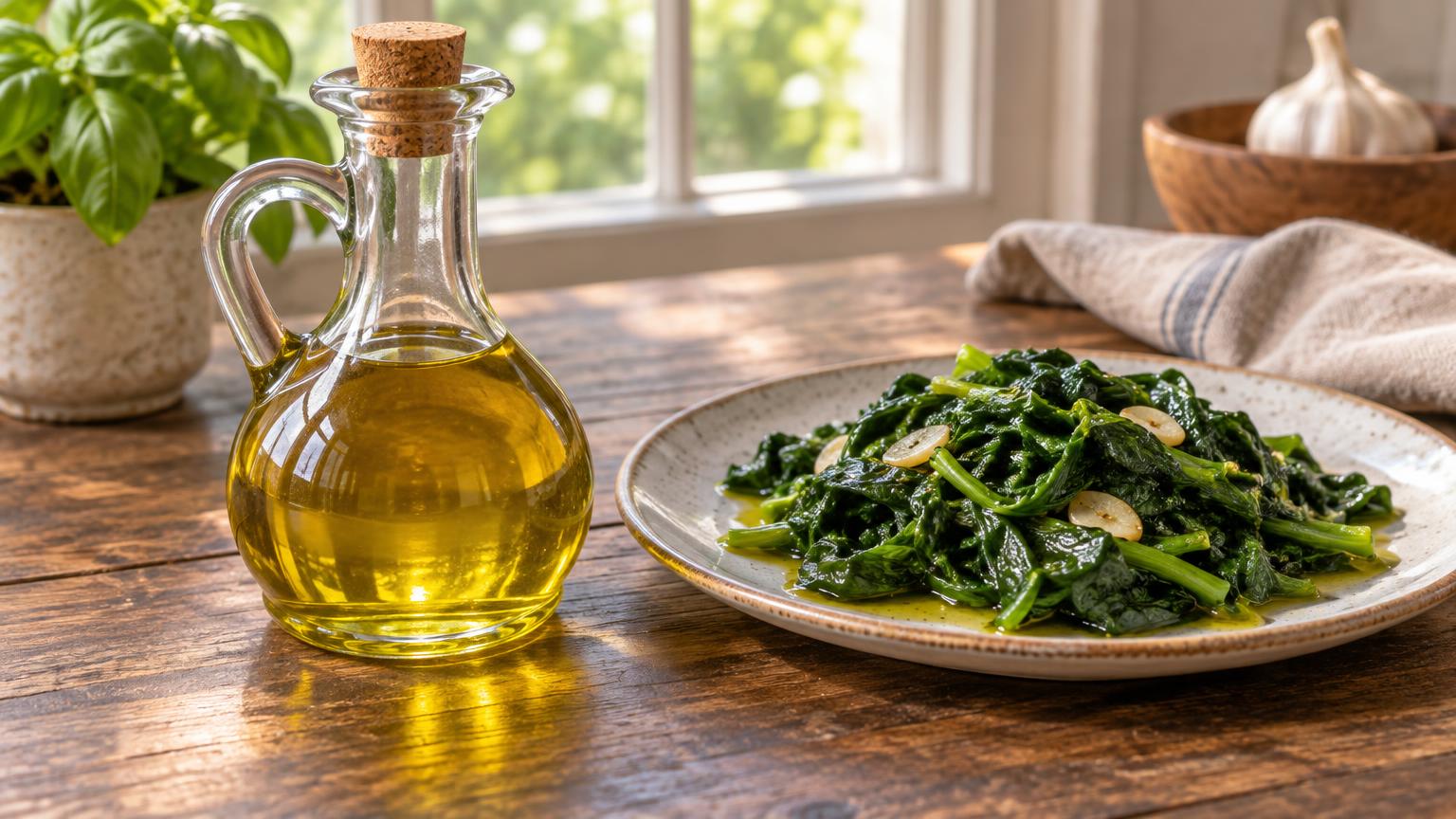
Olive oil is not a waist shrinker you drink by the spoon. In a 16-week trial, 144 postmenopausal women with central obesity ate a calorie-restricted Mediterranean-style diet or a calorie-restricted higher-fiber Central European diet. Across the whole trial, weight fell about 8.8%, waist about 7%, and visceral fat about 25%, with no meaningful difference between the two diets. 2
The calorie cut did the heavy lifting. The food pattern was the way they cut calories without living on shakes. Olive oil fits that pattern when it replaces butter on vegetables and fish, not when it is added on top of the same large meals.
What to pull back, without a banned-food list
You do not need a banned-food list. You need these to stop being the default. They add calories without soluble fiber or much protein.
- Sugary drinks, including juice you think of as fruit.
- Alcohol on most days.
- Snack foods that push the beans, oats, and fruit off the plate.
Movement belongs in the same sentence as the food. In the CT study, being moderately active was linked with a slower gain of visceral fat than fiber alone. 1 A brisk walk most days, plus anything that asks your legs and arms to push or carry twice a week, matches what the muscle research is pointing at. 3
- Put beans or lentils on four meals. Half a cup counts.
- Swap one sweetened breakfast for oats or eggs plus fruit.
- Add one obvious protein food at breakfast if that meal is usually toast and coffee.
- Use olive oil on the vegetables, and leave the second pour off.
- Walk on the days you change the food. The fiber finding and the activity finding showed up together. 1
Sources
- Hairston KG, Vitolins MZ, Norris JM, et al. Lifestyle factors and 5-year abdominal fat accumulation in a minority cohort: the IRAS Family Study. Obesity. 2012. https://pubmed.ncbi.nlm.nih.gov/21681224/ The example of two small apples, a cup of green peas, and half a cup of pinto beans is from the Wake Forest team’s description of that study. https://www.eurekalert.org/news-releases/910630
- Weight loss and metabolic health effects from energy-restricted Mediterranean and Central-European diets in postmenopausal women: a randomized controlled trial. Scientific Reports. 2018. https://www.nature.com/articles/s41598-018-29495-3
- Juppi HK, Sipilä S, Cronin N, et al. Role of menopausal transition and physical activity in loss of lean and muscle mass: a follow-up study in middle-aged Finnish women. Journal of Clinical Medicine. 2020;9(5):1588. https://doi.org/10.3390/jcm9051588
- Bauer J, Biolo G, Cederholm T, et al. Evidence-based recommendations for optimal dietary protein intake in older people: a position paper from the PROT-AGE Study Group. Journal of the American Medical Directors Association. 2013;14(8):542-559. The 25 to 30 gram per-meal figure is from the lead author’s summary of that paper. https://pubmed.ncbi.nlm.nih.gov/23867520/
Related posts:

How Many Eggs a Week Is Healthy After 50? What Research Says About Cholesterol and Memory
Are You Eating Enough Protein? A 2-Minute Self-Check for Women Over 40

Resetting Your Metabolism After 40 for Sustainable Weight Loss
Why You NEED to Prioritize Protein in Your Diet

Are Food Sensitivities Sabotaging Your Weight Loss?
Leave a Reply