Most women over 40 are not short on protein because they skipped a steak. They are short because breakfast was toast and coffee, and the rest of the day never quite made up for it.
This is a kitchen check, not a lab test, and not advice if you have kidney disease.
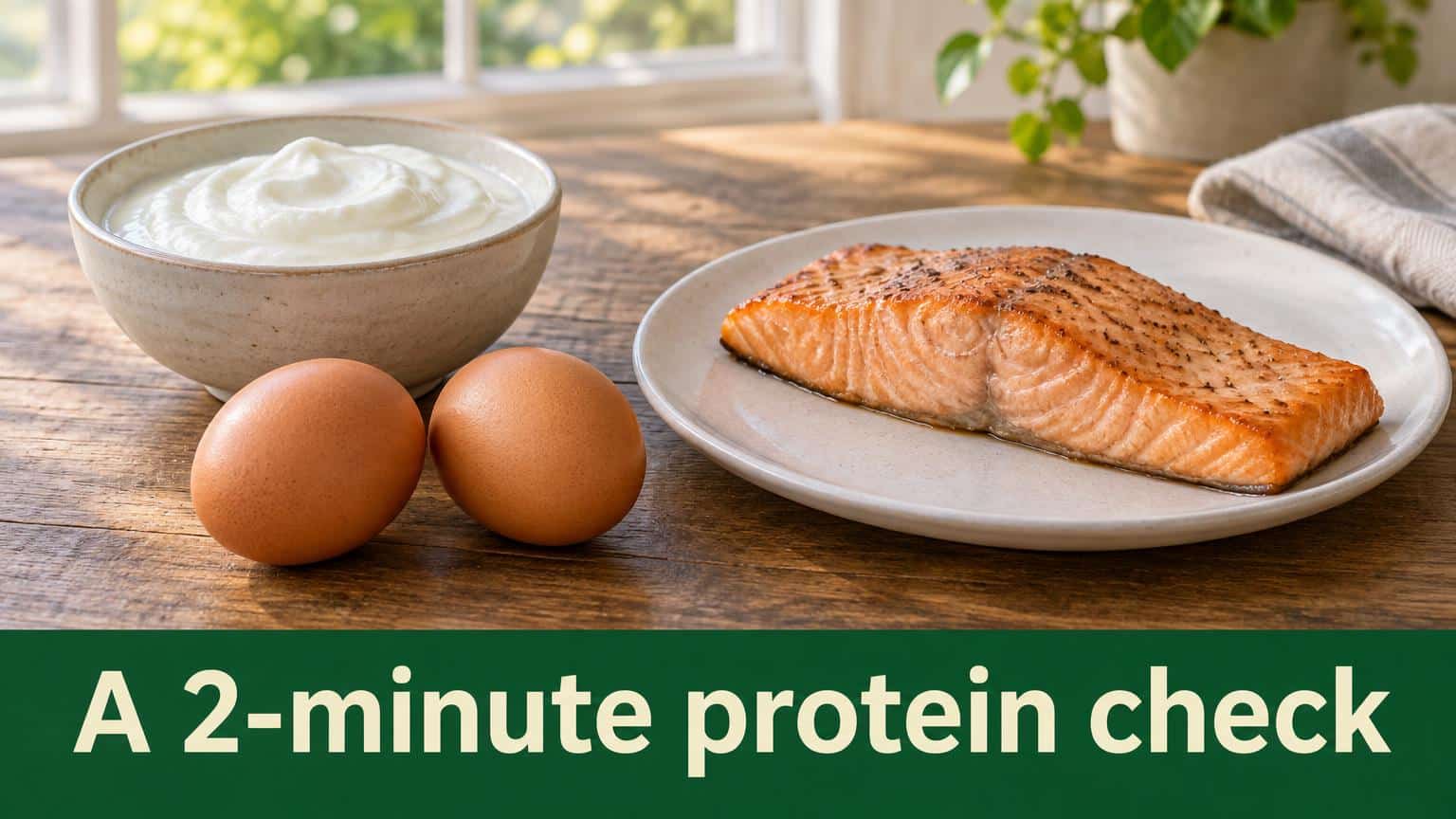
Why the number moved
The recommended dietary allowance, 0.8 grams of protein per kilogram of body weight a day, was built to keep most healthy adults from a deficiency. The PROT-AGE group, writing for healthy people over 65, called that too low for keeping muscle. Their range is at least 1.0 to 1.2 grams per kilogram, more if you are active or ill, spread through the day at roughly 25 to 30 grams in a meal. People with severe kidney disease, an eGFR under 30 who are not on dialysis, are the exception and may need to limit protein. 1
The Dietary Guidelines for Americans, 2025–2030, released in January 2026, set a higher serving goal for the general public: 1.2 to 1.6 grams per kilogram a day, adjusted to how many calories you need, with protein at every meal. 2
That top number is not a settled requirement. The American College of Cardiology pointed out that the jump above the old 0.8 gram allowance was not what the scientific advisory committee had recommended. Treat 1.6 as the high end of a federal serving goal, not as a score you fail. 3
What is actually changing in your 40s and 50s
Muscle loss is real and easy to oversell. A 2026 review found lean mass about 2.5% lower in perimenopause and about 5.7% lower after menopause, compared with premenopausal women. Most of that evidence is from body scans that are not pure muscle, and many of the comparisons also include an age gap. It is a shift, not a cliff. 4
A follow-up of 234 Finnish women, ages 47 to 55, watched lean mass and thigh muscle decline as they moved from perimenopause into early postmenopause. Menopausal status predicted the change. So did physical activity. Protein without some strength work is half a plan. 5
The two-minute check
Use today’s weight, not the weight you want. The table is pounds divided by 2.2, then multiplied, and rounded.
- Find your row in the table, or do the math for your own weight.
- Replay yesterday meal by meal: breakfast, lunch, dinner, and snacks.
- Count a meal only if it had an obvious protein food. Toast, fruit, and a latte do not count.
- See which column you landed in using the list under the table.
| Your weight | 0.8 g/kg, the old minimum | 1.2 g/kg, a practical aim | 1.6 g/kg, the high end of the new goal |
|---|---|---|---|
| 130 lb | 47 g | 71 g | 95 g |
| 150 lb | 55 g | 82 g | 109 g |
| 170 lb | 62 g | 93 g | 124 g |
| 190 lb | 69 g | 104 g | 138 g |
What counts as the protein food: eggs, yogurt, fish, chicken, meat, tofu, cottage cheese, or a real scoop of beans or lentils.
- Under the 0.8 column: you are under the long-standing minimum. That is the one worth fixing first.
- Between 0.8 and 1.2: you are not deficient on the old rule, and you are still light for muscle after midlife.
- Around 1.2, with some protein at each meal: that is a solid place to stop obsessing.
- 1.6 is not a prize. You do not get extra credit for forcing it if you are full, or if a clinician has told you to limit protein.
The usual miss is breakfast. If that meal had no protein food, the day starts in a hole that dinner rarely fills. The older-adult researchers describe about 25 to 30 grams at a meal as a useful chunk, not a sprinkle of cheese on a salad. 1
What those meals look like
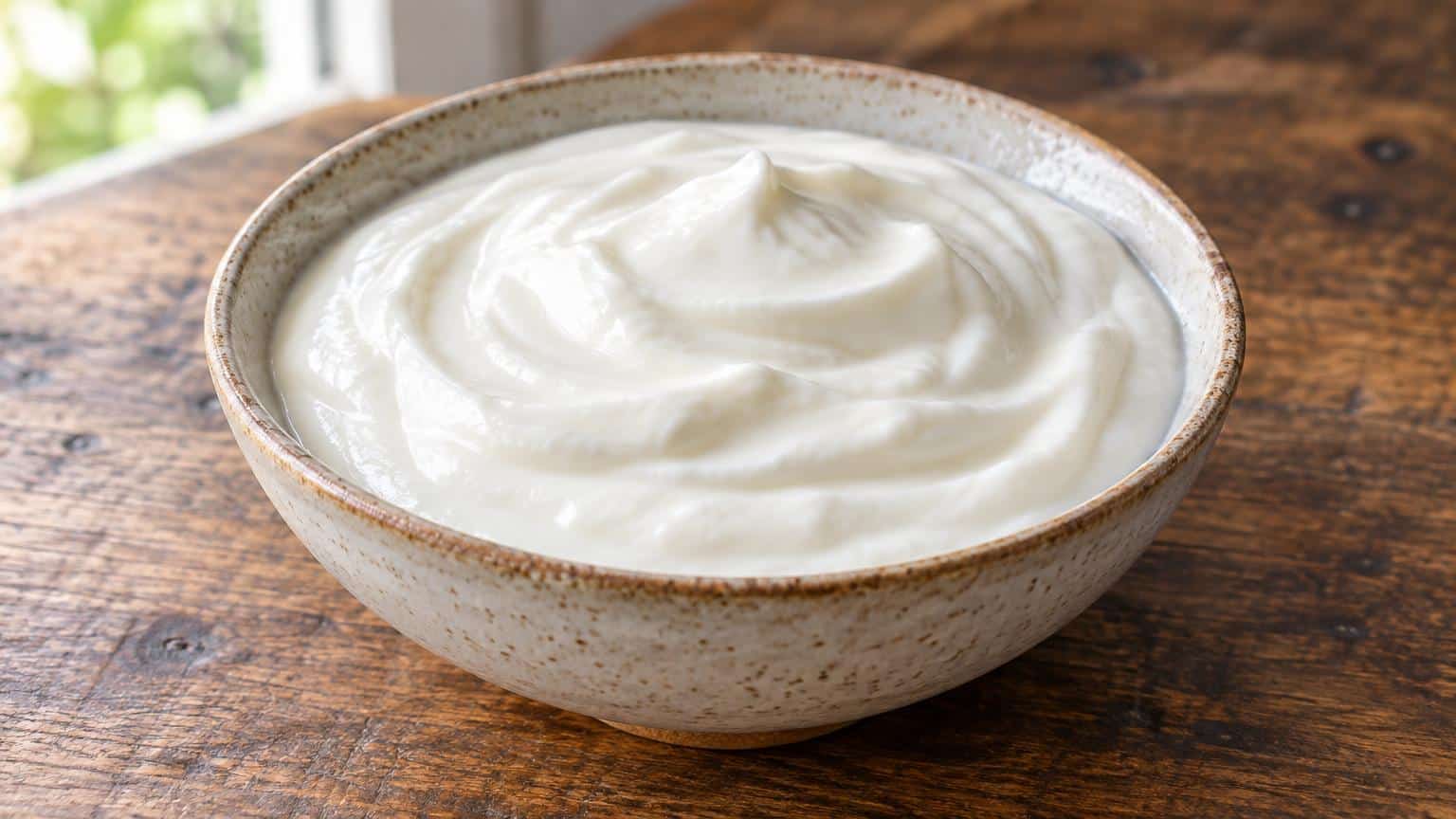
Plain yogurt is the least fussy breakfast fix. A bowl, not a spoonful stirred into coffee. Add fruit if you want it. Skip the version that is mostly sugar.
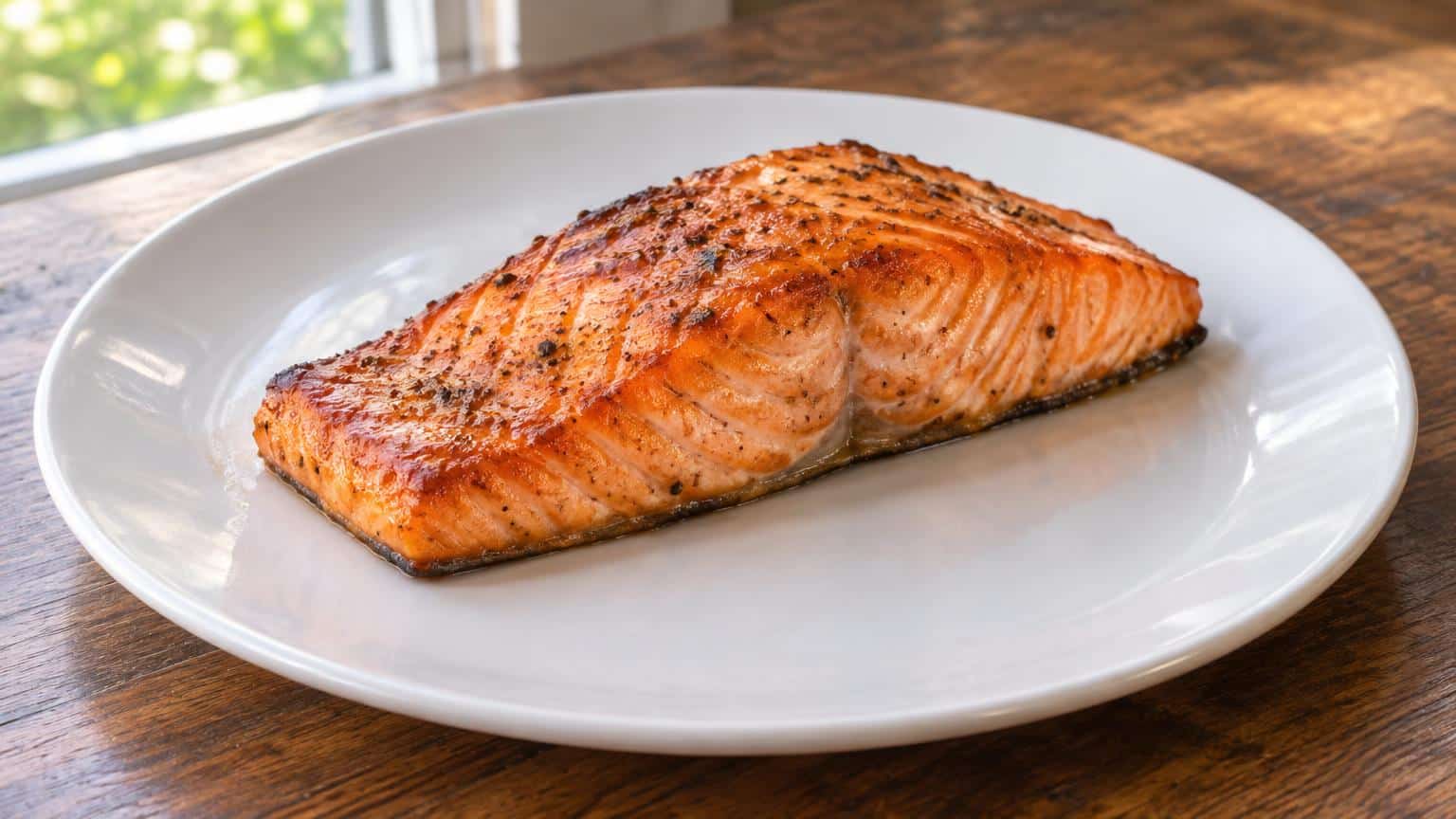
A piece of fish or chicken about the size of your palm is one of those 25 to 30 gram meals by itself. It does not have to be plain. It does have to be the center of the plate, not a garnish.
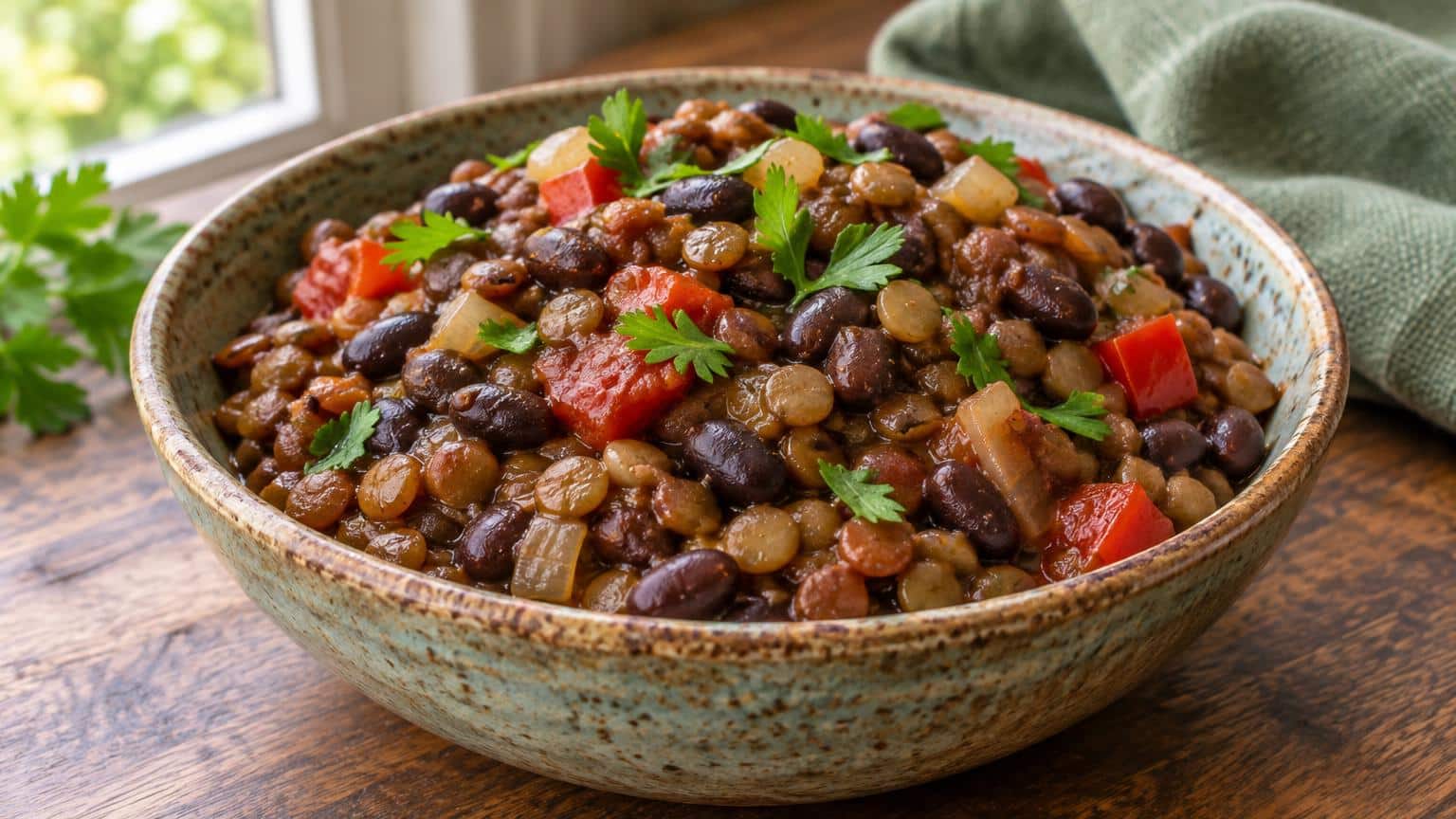
Beans and lentils count. A sprinkle on a salad does not. A bowl, or a half cup next to eggs or yogurt, does. Two foods together is normal. You are not trying to hit the number with one ingredient.
Who should not push the number up
If your kidneys are already in trouble, more protein can be the wrong direction. PROT-AGE singled out severe kidney disease, an eGFR under 30 and not on dialysis, as the group that may need a limit instead of a raise. That decision belongs with the clinician who has your labs, not with a table on a website. 1
- Weigh yourself, divide pounds by 2.2, and circle 0.8 and 1.2 on the table.
- Mark yesterday’s meals. Any meal without an obvious protein food is a zero.
- If breakfast was the zero, put yogurt, eggs, or beans there tomorrow. Do not wait for a perfect meal plan.
- Add two short strength sessions this week if your joints allow it. The muscle findings and the protein findings travel together. 5
- If you have kidney disease, take the table to your clinician before you add food.
Sources
- Bauer J, Biolo G, Cederholm T, et al. Evidence-based recommendations for optimal dietary protein intake in older people: a position paper from the PROT-AGE Study Group. Journal of the American Medical Directors Association. 2013;14(8):542-559. https://pubmed.ncbi.nlm.nih.gov/23867520/ The 25 to 30 gram per-meal figure is from the lead author’s summary of that paper. https://www.caringfortheages.com/article/S1526-4114(13)00301-6/fulltext
- U.S. Department of Agriculture. Kennedy, Rollins unveil reset of U.S. nutrition policy. Press release. 7 January 2026. https://www.usda.gov/about-usda/news/press-releases/2026/01/07/kennedy-rollins-unveil-historic-reset-us-nutrition-policy-put-real-food-back-center-health MedlinePlus summary of the same protein goal, 1.2 to 1.6 grams per kilogram. https://medlineplus.gov/ency/article/002093.htm
- American College of Cardiology. How do the 2025-2030 Dietary Guidelines for Americans measure up for cardiovascular health? 27 January 2026. https://www.acc.org/latest-in-cardiology/articles/2026/01/27/16/22/how-do-the-2025-2030-dietary-guidelines-for-americans-measure-up-for-cardiovascular-health
- Menzies C, Bowtell R, Shur N, Brook MS. Menopause, female sex hormones, skeletal muscle mass and muscle protein turnover in humans. Journal of Cachexia, Sarcopenia and Muscle. 2026. https://onlinelibrary.wiley.com/doi/10.1002/jcsm.70232
- Juppi HK, Sipilä S, Cronin N, et al. Role of menopausal transition and physical activity in loss of lean and muscle mass: a follow-up study in middle-aged Finnish women. Journal of Clinical Medicine. 2020;9(5):1588. https://doi.org/10.3390/jcm9051588
Related posts:

How Many Eggs a Week Is Healthy After 50? What Research Says About Cholesterol and Memory

Do GLP-1 Drugs Like Wegovy Affect Brain Health? What the Research Shows So Far
Foods That Help Reduce Belly Fat After 50, According to Dietitians

Surviving Menopause: How I Managed Intense Symptoms and Found Balance
Why You NEED to Prioritize Protein in Your Diet

Leave a Reply